

The event will amplify the effects of conflict, highlighting the importance of climate resilience to global security.
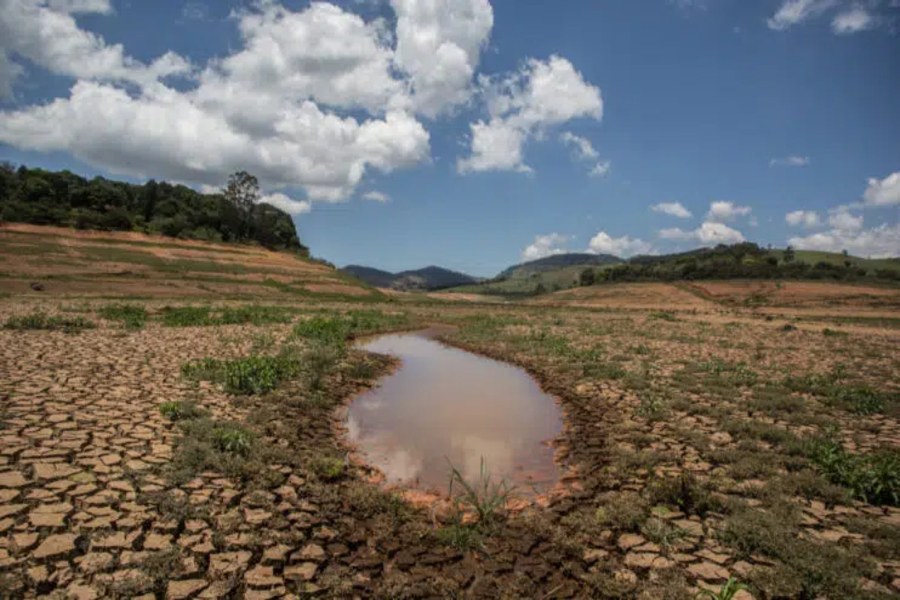
The Iran war has sparked generational shocks to global energy and food security. As the effects of these shocks—from fuel shortages to food price spikes—become increasingly apparent, they will strain peace and stability worldwide. Some of these impacts are already unavoidable, with disruptions intensifying if the conflict persists. But independent of U.S. actions in the region, the coming of a hotter, more dangerous weather pattern known as El Niño is set to exacerbate the food and energy security fallout of Iran—reminding us that Mother Nature gets a vote on our priorities, too, and that climate resilience is inseparable from global security goals.
As world leaders talked geopolitics at February’s Munich Security Conference and returned home to March’s Iran conflict, scientists started forecasting that Earth is starting to transition from its current La Niña phase, entering an El Niño phase as soon as June. During El Niño, warm waters shift east in the Pacific, raising global temperatures and intensifying extreme storms, precipitation, and droughts in many parts of the world. The most recent warm cycle in 2023-2024 gave us the hottest year ever recorded, briefly breaching the Paris Agreement’s 1.5 degrees Celsius benchmark, and fueled record-breaking drought, floods, and other disasters around the world. Even with La Niña sanding off climate change’s sharpest edges, 2025 temperatures were 1.4 degrees above preindustrial levels and the third hottest year ever recorded, with today’s cool periods regularly hotter than the warmest periods of history. This was described as “a breaking point” and forced militaries to deploy more than 150 times around the world for climate disasters.
The next El Niño is likely to intensify warming to even greater highs in 2026-2027, with a growing probability of an especially warm “Super” El Niño. A climate change-fueled El Niño will amplify the global shocks of the Iran war, many of which will unfold over the coming year even in the unlikely case that risk of renewed conflict resolves soon.
Adding Fuel to the Fire
El Niño will amplify catastrophic effects on global energy security. Iran’s disruption of oil and gas flows through the Strait of Hormuz caused the largest oil shock since World War II and started spiking oil and regional liquefied natural gas (LNG) prices even before shipments started failing to arrive from weeks-long journeys to recipients. With threats of disruption persisting in the strait, a major shock is reverberating through the system. Even if the strait is durably opened, it will take time to clear backlogged ships, for insurers to feel confident that transit is safe, and for damaged or shuttered oil and gas facilities to resume production. Countries would normally be stocking up on natural gas over the spring and summer for winter heating needs, and El Niño could further intensify pressure with intensified heat, electricity demand for cooling, and energy grid strains this summer. Countries in Southeast Asia are already scaling back on air conditioning, concerned that dangerous summer temperatures could crash electric grids and kill citizens.
Meanwhile, a slow-moving global food security crisis is unfolding. Gulf nitrogen fertilizer exports that are about a third of global maritime trade are blocked and will remain threatened. Countries that depend on Middle Eastern gas to produce their own fertilizers shut down production, spiking prices for key fertilizers by 20 to 40 percent. Again, regardless of ceasefire negotiations, a domino of food shocks has already begun—farmers who are planting tomorrow’s food now have been forced to delay planting, switch crops, or accept subpar yields. Food security can be disrupted further as fuel and logistics costs rise, agricultural land is repurposed for newly economical biofuels, and countries potentially react with protectionism and export restrictions that spike prices further.
Into this mix, El Niño-driven drought, heat, and flooding this summer or beyond could disrupt crop production, harvesting, or distribution even more—exacerbating hunger and spiking prices. El Niño can harm maize in China, Southern Africa, and Central America; wheat in the Mediterranean, Australia, and South America; and rice in Asia, threatening food security for countries already struggling with energy and fertilizer shocks.
A Dangerous Combination
These shocks are likely to hit vulnerable populations hard. Not only is the world’s climate hotter and its economies battered—its coping capacity is weaker. Washington has slashed programs that buffered climate-driven humanitarian emergencies, food shocks, and resource conflict—including USAID assistance, funding for the World Food Programme, or federal science data sharing and early warning. Europe is also making harsh trade-offs at the expense of overseas aid in favor of defense—collectively, Group of 7 foreign aid is set to drop nearly 30 percent compared to 2024. In that year, when El Niño-driven drought wreaked havoc on Zambia’s food security, U.S. government scientific data helped warn of impending impacts, and USAID and a less cash-strapped UN system intervened with drought-resistant seeds, food assistance, and insurance. Such warning and intervention is less possible today.
But the impacts extend beyond humanitarian emergencies and development goals—the shift toward El Niño has been shown to heighten geopolitical risk similarly to a new interstate war. Food price spikes are a time-tested recipe for instability, exemplified by the role of crop failures in helping spark the Arab Spring, which had lasting security consequences. The Gulf States are nearly entirely reliant on food imports that are at direct risk. Elsewhere, import-dependent countries most vulnerable to food price shocks include Middle Eastern stability bulwarks such as Morocco and Jordan, countries important to the EU/NATO such as Portugal and Moldova, and trade chokepoints such as Panama. In Iran itself, the country’s long-standing water crisis has driven protests and repression, threatened the habitability of Tehran, and shaped tensions with neighbors over shared waters. These flashpoints will still be waiting for whatever regional order emerges—likely a more tense, impoverished, and repressive one.
In Europe, heightened extreme weather and the conflict’s shocks to energy and food prices will strain infrastructure and economies, giving Russia more openings for its disinformation and hybrid warfare playbook. Moscow has regularly exploited disasters, energy costs, and farmer protests to undermine and divide its adversaries, and it still maintains leverage as a key grain, fertilizer, and gas supplier, including in the Caucasus along NATO’s eastern flank. During 2024’s El Niño, Europe saw devastating flooding in Spain, Poland, and elsewhere, which prompted Russian disinformation campaigns to undermine governments and weaken NATO unity.
The Security Imperative of Climate Resilience
Many diplomats and defense leaders have deprioritized climate over the past year—some with anguish and others with relief—in the face of U.S. hostility. (At February’s Munich Security Conference, a European climate envoy’s job title prompted a colleague to respond with a pitying “good luck with that.”) But the convergence of looming extreme weather with the shocks from Iran should underscore that investing in climate-resilient food, water, and energy systems is not in competition with durable security—it is essential to achieving it.
Governments are understandably scrambling for short-term solutions to protect their populations from spiking energy and food costs. A durable and confidence-inspiring resolution to the U.S.-Israel-Iran war is ultimately required to stop unavoidable shocks from worsening further, while vulnerable countries will need food assistance and financial support to buffer shocks.
In the longer term, leaders across Europe and Asia are already discussing how the Iran war amplifies the national security imperative of domestic renewable energy, which does not rely on fragile fuel supplies that can be severed by enemies or natural disasters. A key question is whether governments respond to the near-term energy shock without ignoring or exacerbating long-term vulnerability. Temporarily reactivating a coal plant to keep the lights on is one thing; locking in a new 20-year LNG contract is another.
The unfolding Iran-El Niño food shock should raise similar long-term thinking about climate-resilient food and security. Using fertilizers more efficiently, moving toward less fossil fuel-intensive fertilizer alternatives, and diversifying and hardening agricultural systems represent buffers against instability, extremist exploitation, and hybrid warfare as much as environmental programs.
Europe will be a key space to watch. This year, NATO is updating members’ resilience requirements—including for food and water security, energy, and infrastructure resilience—which may be tested in real time. Member states are wrestling over how to allocate their 5 percent gross domestic product defense spending target, with Spain leading a push for climate investments to count toward the 1.5 percent set aside for “resilience.” Europe faces key decision points around the EU Common Agricultural Policy, implementing the EU-Mercosur free trade agreement with agricultural powerhouse Brazil, and finalizing development components of its 2028-2034 budget, all of which will shape this trajectory. Governments such as the United Kingdom, Germany, the Netherlands, and France will choose whether to continue their planned cuts to overseas development through 2027.
But compound climate and Iran shocks could also shake up policy elsewhere. Presidential elections will take place in Brazil, an agricultural powerhouse, where divides over developing or conserving the Amazon and its crucial carbon sink are a key political fault line. Leaders will face pressures in Japan and Korea—among the countries most dependent on imported food and fossil fuels. And of course, in the United States extreme weather and the Iran fallout will likely help shape the 2026 midterm elections. With the Federal Emergency Management Agency’s disaster relief capacity unclear, spiking food and energy prices a key political grievance, Trump’s polling lower than at any time to date, and sustained public concern with climate and the environment, a recipe exists for intensified climate politics (even if it goes by different names).
The costs of climate change to security, economic prosperity, and alliances were already hitting hard during 2025, as traditionally U.S.-sponsored pillars of global resilience weakened. Now, El Niño and the aftershocks of the Iran war are set to bring another set of harm to lives, pocketbooks, and stability around the world. In a decade defined by COVID-19, then Ukraine, and now Iran, it is the latest reminder that climate action is an indispensable ingredient in durable global security, which cannot wait for a crisis-free time that will never arrive. For those shaping resilience, defense, and foreign policy agendas around the world, it would be a mistake to let near-term crisis response or U.S. antagonism crowd out climate-smart policy—just when it’s more relevant and critical than ever.
– Tom Ellison is deputy director of the Center for Climate and Security (CCS). Prior to joining CCS, he spent a decade in the US intelligence community, where he helped expand analysis of the security and foreign policy implications of climate change for senior policymakers across the U.S. government. Published courtesy of Lawfare.
