

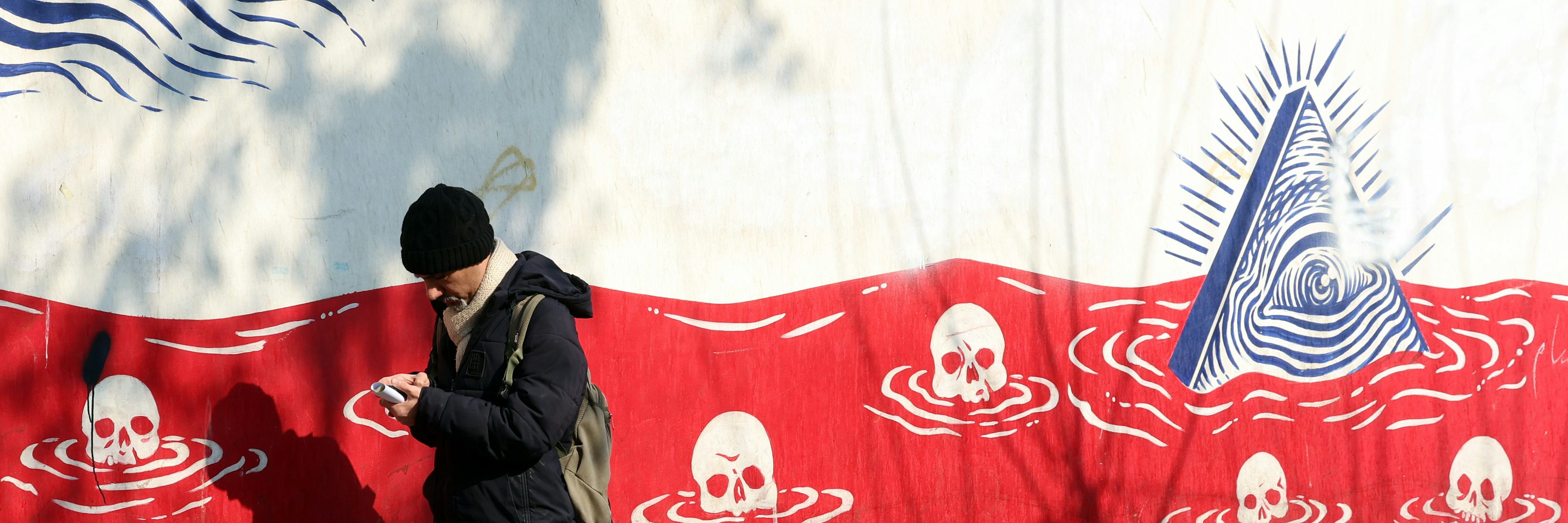
A man walks past an anti-US mural in Iran during the global internet shutdown. Abedin Taherkenareh/EPA
On January 8, as thousands of Iranians took to the streets in nationwide protests, the government cut off the internet.
Under cover of digital darkness, the Iranian regime launched a brutal and deadly crackdown against anti-government protesters. What information has got out, including testimony from morgues, graveyards and doctors who treated the injured, suggests thousands of people have been killed.
Iran has shutdown the global internet before, but never for this long. Without the internet, trading has slumped. Many entrepreneurs who rely on Instagram to do business can’t post. Lorry drivers are struggling to cross borders because they can’t access digital documents. By some estimates, internet shutdown can cost more than US$37 million a day.
After three weeks of internet blackout, reports from web traffic monitor Netblocks suggest that the internet is slowly coming back online but the connection is predominantly for government-approved users.
Yet for most of the shutdown, banks and some local government websites and apps still worked. And that’s because Iran is developing its own, national internet, cut off from the rest of the world.
In this episode of The Conversation Weekly podcast, we speak to Amin Naeni, a PhD candidate researching digital authoritarianism at Deakin University in Australia, about how Iran built one of the world’s most sophisticated systems of digital control.
Gemma Ware, Host, The Conversation Weekly Podcast, The Conversation
This article is republished from The Conversation under a Creative Commons license.
