

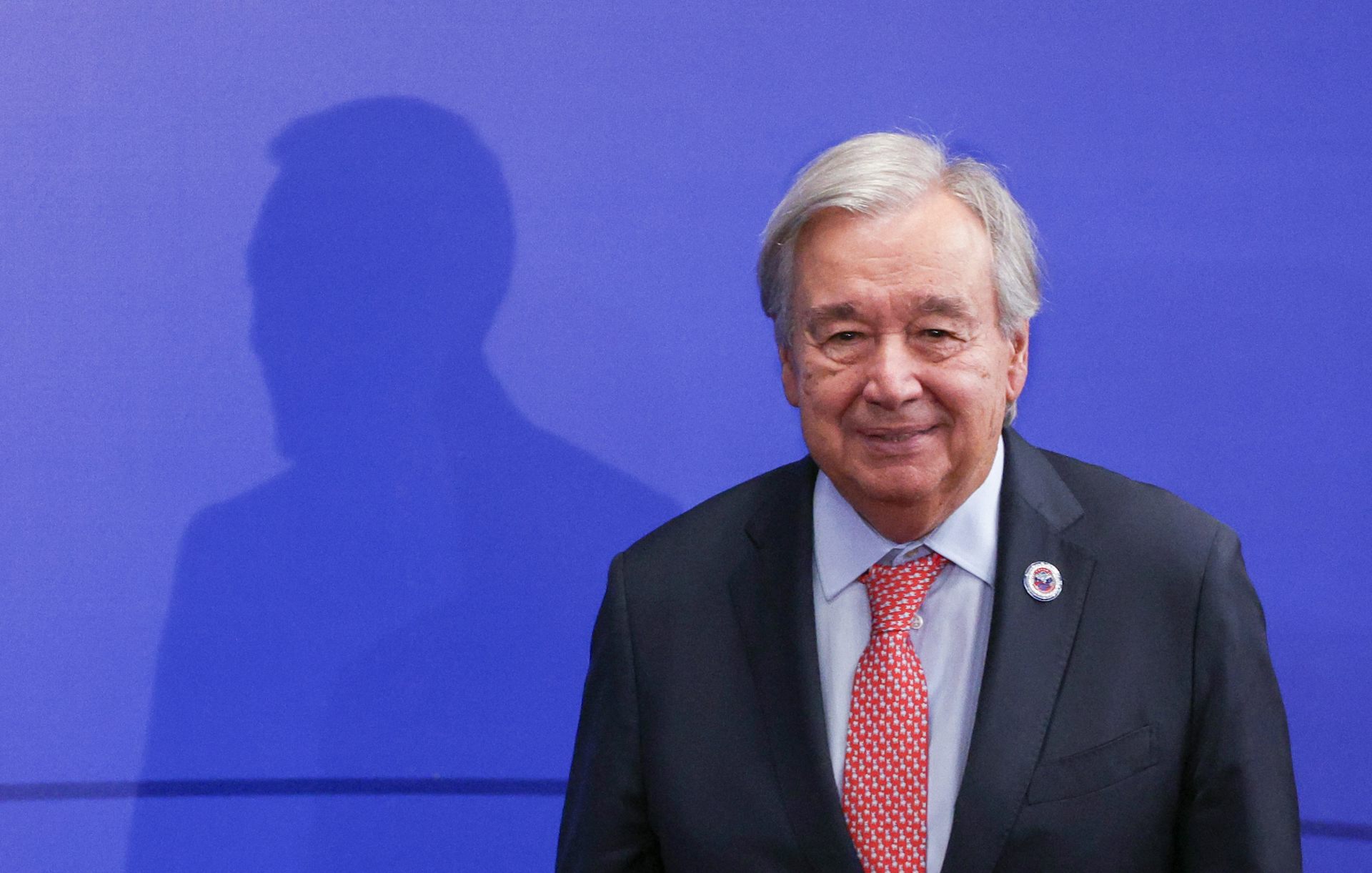
When António Guterres steps down as United Nations secretary-general at the end of 2026, he will leave his successor with plenty to do.
Many challenges will remain, including the animosity among members and myriad global challenges, from ongoing wars and economic shocks to the worsening effects of climate change. But the next U.N. chief faces the additional woes of an international body starved of cash and at odds with its most powerful member: the United States. The second Trump administration has proved itself no fan of multilateralism and sees the U.N. as a bloated organization doing little to serve U.S. interests. In fact, skepticism toward the U.N. is now on the rise in many countries.
For good reason, voices as respected as Graça Machel, the deputy chair of The Elders – the body created by Nelson Mandela to bring ethical guidance to global governance – have called the selection of the next U.N. secretary-general “one of the most consequential decisions the international community will make this decade.”
No doubt the U.N. needs – and is worth – saving. But as someone who once worked in the body’s executive office of the secretary-general, I know the process for selecting a new chief does not lend itself to finding a savior at the best of times. And in the current geopolitical climate, the prospects are next to nil. Moreover, any U.N. secretary-general is bound by the political and bureaucratic constraints under which they operate.
Yet even if asking the occupier of the office to restore the U.N. to relevance single-handedly is expecting too much, a secretary-general can wield substantial influence if they understand the potential and the limits of the role.
Who calls the shots?
According to the U.N. Charter, the secretary-general “shall be appointed by the General Assembly upon the recommendation of the Security Council.”
While the General Assembly – all member states of the organization – has ultimate authority, it is the Security Council that makes the decision. And because the five permanent members of the Council – China, France, Russia, the United Kingdom and the U.S. – have veto power over who gets “recommended,” it is those countries, known by the shorthand P5, that call the shots. Until 2016, there was little campaigning for the job. Rather, the winner emerged through much backroom dealmaking among the P5 itself and between those nations and potential candidates.
Since then, however, pressure from civil society groups and the 188 U.N. members that do not have a permanent seat on the Security Council opened up the process. Candidates are now expected to issue vision statements and participate in General Assembly-convened “interactive dialogues” in which all states and NGOs can participate, as well as informal meetings with Security Council members.
This more open process was meant to reduce some of the P5 dominance and, arguably, it did with the election of Guterres, a former prime minister of Portugal who has served as U.N. chief since 2017. Guterres leaves behind a mixed record, having notched notable successes with the Pact for the Future and putting AI governance on the U.N. agenda, but seen as too passive as a mediator of conflicts by some diplomats and former U.N. officials.
The risk to an open selection process this time around is that two of the most powerful leaders of P5 countries – Trump and Russian President Vladimir Putin – appear not to care much about process, or about the reputational costs associated with circumventing it.
Moreover, they seemingly care little about how the selection might reflect on the legitimacy of the U.N. as a whole.
As of early September, eight candidates are still in the race, each of whom has gone through the more open process, as well as several straw polls among the 15 members of the Security Council designed to whittle down the number.
Yet one or more of the P5 could inject new names at the last minute, once again leaving the decision to behind-the-scenes bargaining among a few powerful states.
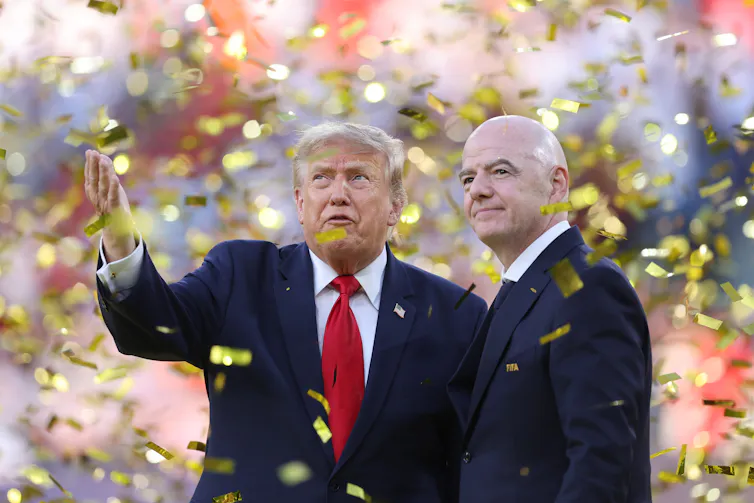
So, what kind of secretary-general is the U.N. likely to get?
At the risk of oversimplification, the P5 – the U.S. and Russia especially – want an “administrator” they can control. Most of the rest of the membership want an independent and proactive secretary-general that the P5 cannot control.
Given the stranglehold the five have on the selection process, we are not likely to get the second. Both the U.S. and Russia have made it clear they want a “secretary” not a “general.” Even if they did want a global leader, it would be hard for the P5 to agree on the issue areas where leadership is needed.
But many governments outside the P5 will have trouble accepting a passive bureaucrat who simply follows orders. They believe the future of the U.N. requires more. And even if they did want an apparatchik, they know it is not possible for an organization of 193 countries to give clear orders, so the officeholder will necessarily have to exercise some independent judgment.
Knowing who gets picked will not necessarily tell us how they will lead. Sometimes secretaries-general can surprise, as my former boss Kofi Annan did. Having risen through the U.N. bureaucracy, he was expected to be a dutiful functionary but served more as the world’s top diplomat and moral voice.
What the job entails
The U.N. Charter says little about the job of secretary-general, and yet it has been interpreted over the years to encompass many roles.
I would cluster them into three: global diplomat, normative leader and manager of a sprawling bureaucracy.
The key challenge for a secretary-general is to figure out what is achievable in each of the three roles.
As a global diplomat, the chief cannot resolve conflicts between the great powers, but can work at the interstices of those tensions, finding the political space to broker agreements such as the Black Sea grain deal between Russia and Ukraine in 2022, which reopened the maritime routes from Ukrainian ports that Russia had blockaded.
As a normative leader, the U.N. chief cannot impose binding obligations on countries, but can promote powerful ideas such as the responsibility to protect civilians from mass atrocities or foster human development.
As chief administrative officer, the secretary-general cannot fix the Security Council or eliminate inefficiency. But they can set a reform agenda, as Guterres has done with the UN80 Initiative, and cajole coalitions of states into driving that agenda forward.
To heaven or hell?
The main source of a secretary-general’s influence is not the authority that comes with the office, nor is it their own charisma. Rather, it is the ability to gauge the political winds, listening to the voices of key stakeholders and identifying opportunities to make a difference.
On some matters – conflict resolution, for example – those voices may be the conflict parties and a handful of neighboring states or global powers, and the listening may mean spending countless hours on the telephone.
On other matters – climate change, for example – the relevant voices are 193 governments and civil society organizations speaking for “we the peoples,” and the listening may mean sitting through endless meetings.
Only then can a secretary-general identify where the opportunities lie and choose the moment and method for stepping in. Is it through quiet diplomacy or public naming and shaming? Standing on principle or being pragmatic? Charting a new path, or doubling down on the path already chosen?
It is a mistake to assume success is measured only by dramatic breakthroughs for which a secretary-general can claim sole credit. More often than not, the U.N. chief is but one actor in a complex global political process involving many and often more powerful actors.
If he or she is able to change the dynamics and move the needle in the direction of peace, justice or prosperity, that is enough.
To paraphrase one former holder of the office, Dag Hammarskjöld, a secretary-general can’t bring the U.N. to heaven but can help to save it from hell.
Ian Johnstone, Professor of International Law, The Fletcher School, Tufts University
This article is republished from The Conversation under a Creative Commons license.
